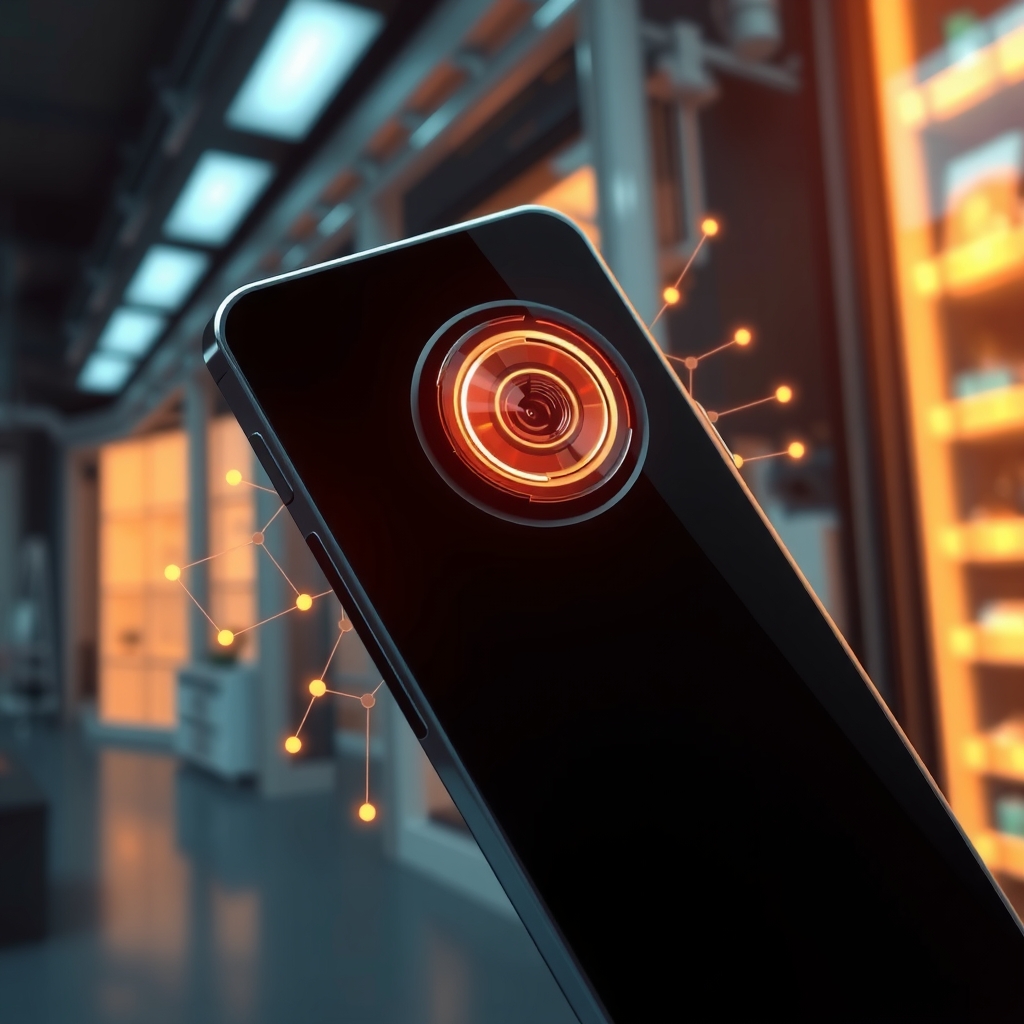
OpenAI has moved deeper into hardware by acquiring Glass Imaging, a Los Altos‑based company that builds AI‑powered camera systems for smartphones. According to a Wall Street Journal report cited by TechCrunch, the deal is valued at more than $300 million. Glass Imaging, founded in 2019 by former Apple engineers Ziv Attar and Tom Bishop, has focused on using neural networks to improve image quality at the moment a photo is taken, rather than relying on post‑capture editing.
What happened
- Acquisition price: Over $300 million, as reported by the Wall Street Journal.
- Target company: Glass Imaging, a startup that raised about $30 million from investors and specializes in AI‑driven smartphone camera technology.
- Founders: Ziv Attar and Tom Bishop, both former Apple engineers who helped develop Apple’s Portrait Mode.
- Technology focus: Glass Imaging trains neural networks on the specific hardware of each phone model, allowing the camera to produce better images straight out of the shutter.
- OpenAI’s response: The company did not comment immediately on the purchase.
- Related hardware rumors: OpenAI is rumored to be working on its own hardware, including smartphones, earbuds, and AI companion devices.
- Past hardware move: In 2025, OpenAI bought designer Jony Ive’s company for $6.5 billion after a joint venture called io was announced.
The acquisition marks a notable expansion of OpenAI’s portfolio beyond software‑only offerings, aligning with its broader hardware ambitions.
Why it matters
Glass Imaging’s core innovation lies in applying artificial intelligence to overcome the physical constraints of tiny smartphone lenses. By embedding AI directly into the imaging pipeline, the startup promises sharper, more detailed photos without the need for bulky optics. For OpenAI, the purchase provides:
- Immediate expertise in on‑device AI for imaging, a field that complements its existing large‑scale models.
- A foothold in the mobile hardware ecosystem, potentially accelerating the development of OpenAI‑branded phones or companion devices.
- Synergy with existing research on multimodal models that handle both text and visual data, enabling richer user experiences on consumer devices.
The bigger picture
OpenAI’s purchase sits within a wave of AI companies expanding into hardware. Earlier in 2025, the company’s collaboration with famed designer Jony Ive on the startup io culminated in a $6.5 billion acquisition of Ive’s firm. Those moves signaled OpenAI’s intent to create integrated devices that combine its conversational AI with specialized sensors and form factors.
Companies like Apple have already leveraged AI for features such as Portrait Mode, which Glass Imaging’s founders helped create. By bringing that know‑how in‑house, OpenAI could offer a competitive alternative to the existing ecosystem dominated by a handful of large OEMs.
The acquisition also underscores the financial appetite for AI‑enhanced hardware. Glass Imaging’s $30 million funding round, while modest compared with the acquisition price, illustrates investor confidence in niche AI applications that solve concrete consumer problems.
What happens next
However, the Wall Street Journal report notes that the AI lab is already rumored to be developing its own smartphone, earbuds, and AI companion devices. Integrating Glass Imaging’s camera AI could become a key differentiator for any future OpenAI‑branded phone, allowing the device to deliver high‑quality images without relying on large lenses.
The acquisition also opens the possibility of embedding OpenAI’s conversational models directly into the camera experience—imagine a phone that can suggest composition tips, identify subjects, or generate captions in real time, all powered by on‑device AI.
Industry watchers will be looking for prototype demonstrations or announcements at major tech events later this year.
OpenAI’s acquisition of Glass Imaging signals a strategic shift toward integrated AI hardware, potentially reshaping how smartphones capture and process images. The move aligns with the company’s broader hardware ambitions and reflects a growing industry focus on embedding intelligence directly into consumer devices.